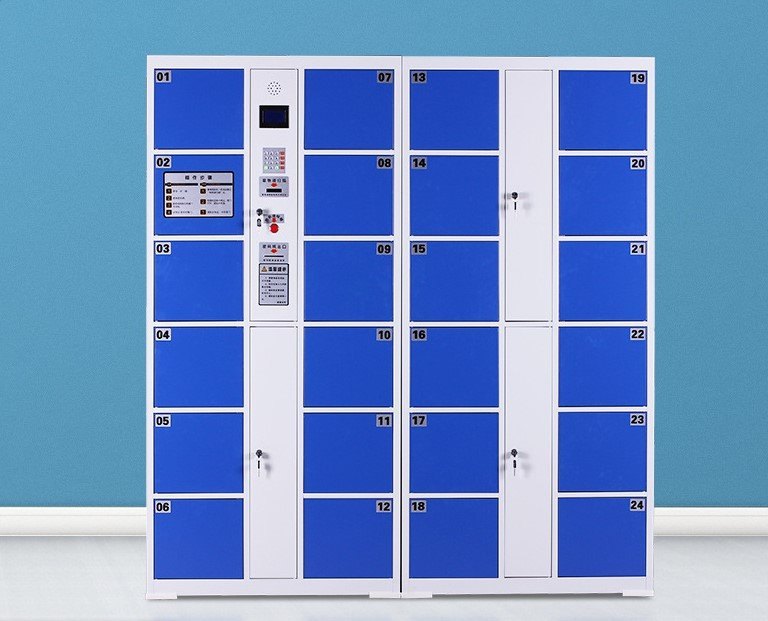
A locker lock is judged at cabinet scale. Each door is pulse-driven - a 100-150 ms pulse from a shared 6-12 V rail - so a latching build with zero holding current keeps per-door energy at pulse-only cost. The cabinet demands fail-secure behaviour (a blackout must not open every compartment) and a mechanical override that still works after years of dust. And every door gets slammed eventually, which loads the bolt several times the static force.
The full requirement set in practice - 8 mm bolt throw on a 150 ms pulse from a battery rail, with override and validation data - is documented as a shipped project in our parcel locker case study. Locks ship as bare solenoids or as tested assemblies with cycle reports at the stated load.
What this specification changes
Pulse duty is the energy story
Zero holding current between pulses is what makes a battery locker bank possible; spring-return parts drain the rail.
Override is used more than you think
Couriers, service techs and dead batteries all end in the mechanical override - it must be designed in and built to survive dust.
Cabinet scale is electrical
One rail, hundreds of doors, harness drop at the far end: pull-in voltage, feedback wiring and pulse timing are cabinet problems.
Models that meet this specification
| Model | Construction | Stroke | Force | Voltage |
|---|---|---|---|---|
| X1010L | Cabinet Lock Solenoid, 5 V | 3 mm | up to 10 N | 5 V DC |
| KS1225L/S | Bi-stable latching KS1225L/S | — | 200 gf | to order |
| X40180 | Square Latching Solenoid | 4 mm | up to 40 N | 6 / 12 V DC |
Values are catalogue figures at the stated duty cycle. The force that matters is the force at your working gap — request the curve for the model you shortlist.
Where this specification is used
Questions buyers ask
What solenoid does a locker lock need?
A 12 V class latching solenoid: 5-10 mm bolt travel, 100-150 ms pulse, holding force two to three times the static load for slammed doors, plus mechanical override.
Fail-secure or fail-safe for lockers?
Fail-secure - locked without power - for unattended cabinets, so a blackout does not open every compartment.
How many cycles will a locker lock last?
Hundreds of thousands when the bolt is not side-loaded and the pulse stays in rating; insist on the cycle report with your load and stroke stated.