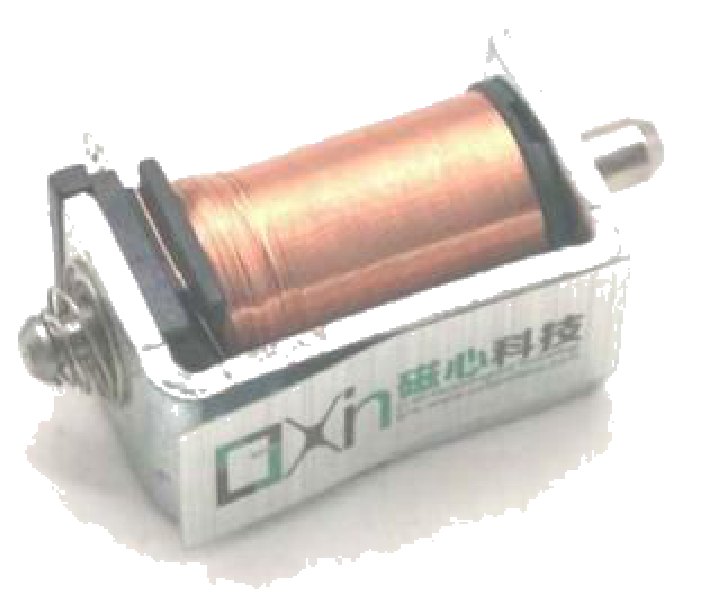
Solenoid pump duty reaches us in two forms. In diaphragm and plunger dosing pumps, a solenoid drives the pump stroke: the coil sees millions of short cycles, so the winding is rated for the pulse train, the armature and stop are hardened for the impact, and the force-stroke curve has to match the diaphragm spring - not a generic pull figure. We build that solenoid; the pump head, check valves and hydraulics stay with the pump maker.
The second form is flow control around the pump: miniature solenoid valves on the suction or discharge line, where orifice size, pressure and medium compatibility decide the valve. Either way the specification starts from the pump's cycle profile - strokes per minute, dwell, supply rail - because duty, not force, is what kills pump-drive coils.
What this specification changes
Duty kills pump coils
Millions of short cycles at high rate are a thermal and mechanical duty case; the winding and the stop are both rated for it, with the test to show it.
The curve must match the diaphragm
Pump drive needs force across the whole stroke against the diaphragm spring - a closed-gap headline figure does not describe that.
Medium decides the valve
On line valves, the fluid decides seal material and body; a cycle test on your medium is the only number worth designing around.
Models that meet this specification
| Model | Construction | Stroke | Force | Voltage |
|---|---|---|---|---|
| QF0421 | Solenoid valve QF0421 | — | on drawing | to order |
| QF2548 | Gas & Liquid Release Solenoid Valve | — | on drawing | to order |
| T1340L/S | Tubular T1340L/S | — | on drawing | to order |
| U0630L/S | Open-frame U0630L/S | — | on drawing | to order |
Values are catalogue figures at the stated duty cycle. The force that matters is the force at your working gap — request the curve for the model you shortlist.
Where this specification is used
Questions buyers ask
Do you manufacture complete solenoid pumps?
No - we manufacture the solenoid that drives the pump and the valves that control its flow; the pump head and hydraulics stay with the pump maker.
What solenoid suits a dosing pump?
One rated for the pump's pulse train: duty-cycle data at your strokes-per-minute, a force-stroke curve matched to the diaphragm spring, and a hardened stop.
Can valves handle water and dosing fluids?
The catalogue valves cover 0.8-3.0 mm orifices at up to 8 bar; the medium decides the seal and body material, confirmed by a cycle test on your fluid.