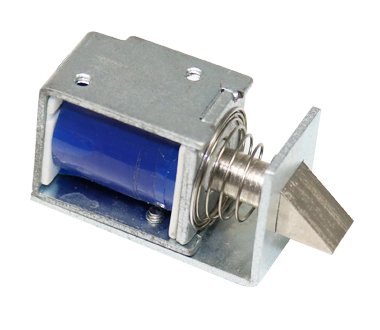
Where a standard solenoid wins
A catalogue part is a finished design with a known curve, a proven coil and an existing process. If a standard frame meets your requirement, it wins on every axis that matters to a schedule: sample days instead of months, no tooling amortisation, a second source that already exists, and field history you can learn from. In our experience roughly two thirds of enquiries end at a standard frame with a winding choice — usually a duty-cycle decision, not a mechanical one.
The trap is the force number. Buyers reject a standard part because its “30 N” headline is below their requirement, when the part actually delivers 45 N at their 4 mm working gap. Read the curve before you rule the catalogue out; the force-vs-stroke guide shows how much force a headline number hides.
Where a custom solenoid wins
Custom earns its cost when the mechanism and the catalogue disagree in a way winding cannot fix:
- Envelope. The frame must fit a housing that no catalogue diameter or mounting pattern matches — the metro door lock case cut the package by 60 % with a custom housing.
- Integration. Plunger end form, return spring, guide and stop supplied as one tested assembly, removing the tolerance stack between your housing and our solenoid.
- Extreme duty. A duty point the ladder cannot cover — very short pulses at high rate, or continuous force with a thermal ceiling that forces a different coil geometry.
- Environment. Sealing, potting or termination that changes the thermal path and therefore the whole coil rating.
Note what is not on the list: “we want more force”. Force is usually a winding or a frame-size decision, not a reason to engineer from zero.
The middle path: modified standard frames
Most “custom” solenoids are standard frames with modifications: a machined plunger end, a different mounting flange, a bracket, a sealed lead exit, a re-rated winding. The magnetic circuit stays proven, the tooling stays trivial, and the prototype schedule collapses from months to days. This is the default answer on our custom design page for exactly that reason — a first article on a modified U- or T-frame keeps the risk in the parts you changed, not in the parts you did not.
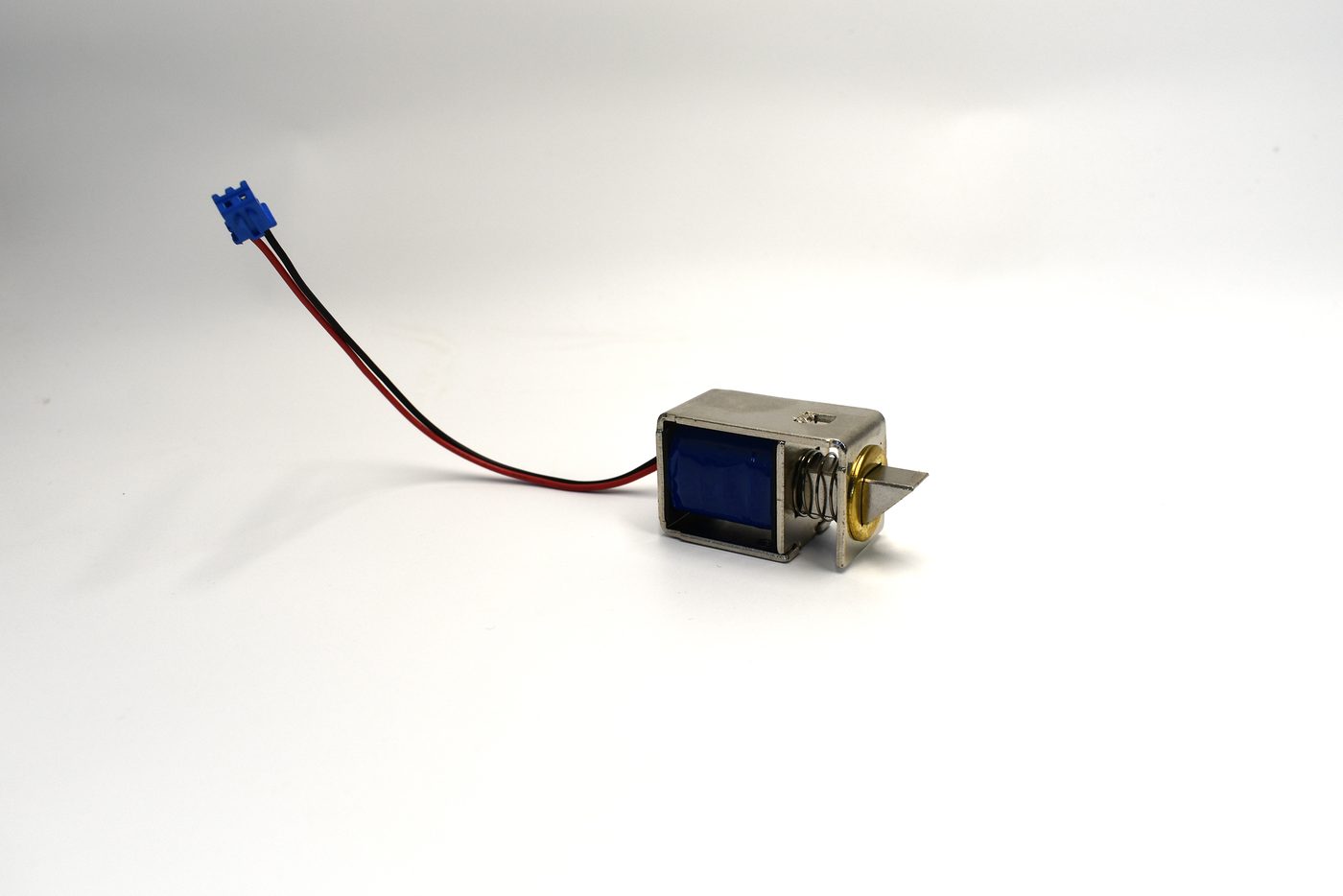
What custom actually costs
Custom cost has three layers, and only the first is visible in a quotation. Tooling is the obvious one — housings, terminations, fixtures — and it is usually smaller than buyers fear when the frame is modified rather than new. The second layer is schedule risk: a new magnetic circuit means iteration, and iteration means your project date moves. The third layer is lifecycle cost: a single-source custom part has to be re-qualified if the supplier exits, and few buyers budget for that. A modified standard frame pays on all three layers at once, which is why we push back on full-custom requests that a modification would satisfy.
Second-source and lifecycle risk
A standard part from an active catalogue has an implicit second source: the same geometry is made by several factories, and a buyer can dual-source after qualification. A fully custom part has none — the drawings, tooling and process knowledge sit with one supplier. That is not an argument against custom; it is an argument for owning the documentation. Whatever you build, keep the drawings, the test reports and the acceptance criteria in your own files, and state in the contract that they are yours. We release the full document set to the customer on custom projects for precisely this reason.
A four-question decision rule
Answer these and the decision usually makes itself:
- Does a catalogue frame meet force at your working gap at your duty cycle? If yes — standard, and stop reading.
- Does the housing clash only at the interface? If yes — modified standard frame, days not months.
- Does the requirement break the thermal or magnetic envelope itself? Then custom, with the schedule and second-source caveats accepted deliberately.
- Is the volume above the tooling break-even? Ask for both quotations — we quote standard, modified and custom side by side, and the crossover point is usually lower than expected.
Send the mechanism on the requirements page and you will get all three answers, with the reasoning. If a specification page for your parameter band already exists — by voltage, force, stroke or size — start there before commissioning anything.
Frequently asked questions
Is a custom solenoid more expensive than a standard one?
Per piece, usually yes; per project, often no. A custom part that integrates the spring, mounting and termination can remove assembly steps and tolerance-stack failures that cost more than the price difference. Quote both and compare total cost at your volume.
How long does a custom solenoid take?
A modified standard frame is typically sampled in days to a few weeks; a new housing and tooling is quoted per project. The schedule depends more on how completely the brief answers the five mechanism questions than on factory speed.
Can I dual-source a custom solenoid?
Not automatically — custom tooling is single-source by default. Own the drawings and acceptance data contractually, and qualify a second winding source for the coil if volume justifies it.
What information does a custom quotation need?
Load, stroke, force at that stroke, cycle profile and environment. With those five, a frame and winding can be proposed with numbers; without them, any quotation is a guess with a price attached.
Related reading
- Top 10 Solenoid Manufacturers in China — How Buyers Actually Build the List11 min
- Solenoid for Smart Lock: Design and Selection Guide12 min
- How to Choose a Solenoid for Parcel Lockers10 min
- Inside a Chinese Solenoid Factory: Capabilities and Quality Control to Verify11 min
- How to Select a Push-Pull Solenoid9 min
- How to Select a Solenoid for Your Application10 min
- Solenoid Force vs. Stroke Explained9 min
- Solenoid Duty Cycle and Maximum On-Time9 min
- Latching vs. Spring-Return Solenoids8 min