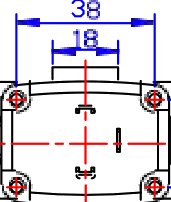
Fluid control solenoid duty splits into two constructions. The valve: a miniature two- or three-way part whose seal and body are chosen for the medium, rated at your pressure and cycle rate. The actuator: the solenoid that drives a diaphragm or plunger pump, where the force-stroke curve has to match the diaphragm spring across the whole travel and the winding has to survive the pulse train.
Both are specified by the fluid, not the datasheet. Medium compatibility decides seal material; pressure decides orifice and armature; cycle rate decides the thermal rating of the coil. The trust-building step is the same for both: a cycle test on your fluid at your pressure, with the result supplied alongside the sample.
What this specification changes
Medium first, construction second
Seal compatibility and body material follow the fluid; specifying it late is the most common cause of a swollen, jammed valve in the field.
Pump drive is a curve problem
The actuator must deliver force across the diaphragm's whole travel, not at one gap - the curve shape is the selection criterion.
Duty decides the coil
Dosing pumps cycle millions of times; the winding, stop and armature are all rated as a duty case, with the test to prove it.
Models that meet this specification
| Model | Construction | Stroke | Force | Voltage |
|---|---|---|---|---|
| QF0421 | Solenoid valve QF0421 | — | on drawing | to order |
| QF4675L | Solenoid valve QF4675L | — | on drawing | to order |
| T1340L/S | Tubular T1340L/S | — | on drawing | to order |
| U0630L/S | Open-frame U0630L/S | — | on drawing | to order |
Values are catalogue figures at the stated duty cycle. The force that matters is the force at your working gap — request the curve for the model you shortlist.
Where this specification is used
Questions buyers ask
What is a fluid control solenoid?
Either a solenoid valve that switches flow or the solenoid actuator that drives a pump mechanism - both specified by the fluid, pressure and cycle rate.
Which fluids can the valves handle?
Water and aqueous duty are standard; other mediums are matched by seal material and confirmed by a cycle test on your fluid before production.
Do you build the pump too?
No - we build the valve and the pump-drive solenoid; the pump head and hydraulics belong to the pump maker.